Structural and chemical evolutions of a magnesium vanadium oxide cathode under electrochemical cycling in magnesium batteries
- Pacific Northwest National Laboratory (PNNL), Richland, WA (United States); Argonne National Laboratory (ANL), Argonne, IL (United States). Joint Center for Energy Storage Research (JCESR)
- Pacific Northwest National Laboratory (PNNL), Richland, WA (United States)
- Argonne National Laboratory (ANL), Argonne, IL (United States). Joint Center for Energy Storage Research (JCESR); Univ. of Illinois, Chicago, IL (United States)
- Argonne National Laboratory (ANL), Argonne, IL (United States). Joint Center for Energy Storage Research (JCESR)
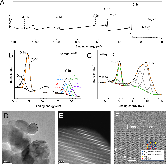
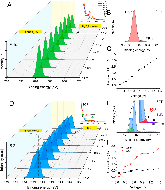
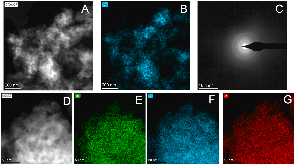
The design of cathode materials that remain chemically and structurally stable during repetitive ion insertion and extraction poses a significant challenge in developing multivalent batteries. The cycling stability of traditional metal oxide-based cathode is challenged by sluggish diffusion of multivalent cations and parasitic reactivity at interfacial regimes, including the cathode electrolyte interphase layer (CEI). Understanding the reactions at the cathode-electrolyte interface, particularly those induced by non-stoichiometric surface layers, is a crucial design parameter for both cathode materials and electrolytes. Here, in this study, we employed multimodal analysis, including in situ and ex situ X-ray photoelectron spectroscopy (XPS), high resolution transmission electron microscopy (TEM) and electrochemical impedance spectroscopy (EIS) to examine the surface reactions and subsequent structural and chemical evolutions of the CEI on high voltage magnesium vanadium oxide (MgV2O4) spinel cathode during the Mg2+ insertion/extraction processes. The results revealed that the presence of non-stoichiometric surface layers in the magnesium vanadium oxide cathode drive the decomposition of bis(trifluoromethanesulfonyl)imide (TFSI-) anion, leading to the formation of the CEI layer. The CEI layer could inhibit the Mg2+ ion transfer processes. Accompanying this reactivity-driven degradation, the magnesium vanadium oxide cathode undergoes pulverization, forming clusters of nanosized particles. This process likely improves cycling ability by creating new intercalation sites and shortening the diffusion pathway for the Mg2+ cations. This study demonstrates that controlling surface stoichiometry and engineering morphological properties are critical design parameters for high performance cathodes for multivalent batteries.
- Research Organization:
- Pacific Northwest National Laboratory (PNNL), Richland, WA (United States)
- Sponsoring Organization:
- USDOE Office of Science (SC), Basic Energy Sciences (BES). Joint Center for Energy Storage Research (JCESR); USDOE Office of Science (SC), Biological and Environmental Research (BER)
- Grant/Contract Number:
- AC05-76RL01830
- OSTI ID:
- 2507163
- Report Number(s):
- PNNL-SA--194303
- Journal Information:
- Nano Energy, Journal Name: Nano Energy Journal Issue: B Vol. 128; ISSN 2211-2855
- Publisher:
- ElsevierCopyright Statement
- Country of Publication:
- United States
- Language:
- English


Similar Records
An artificial interphase enables reversible magnesium chemistry in carbonate electrolytes
Electrochemical reactivity and passivation of organic electrolytes at spinel MgCrMnO4 cathode interfaces for rechargeable high voltage magnesium-ion batteries
Progress in development of electrolytes for magnesium batteries
Journal Article
·
Mon Apr 02 00:00:00 UTC 2018
· Nature Chemistry
·
OSTI ID:1432192
Electrochemical reactivity and passivation of organic electrolytes at spinel MgCrMnO4 cathode interfaces for rechargeable high voltage magnesium-ion batteries
Journal Article
·
Wed Jul 24 00:00:00 UTC 2024
· Journal of Materials Chemistry. A
·
OSTI ID:2571302
Progress in development of electrolytes for magnesium batteries
Journal Article
·
Wed May 22 00:00:00 UTC 2019
· Energy Storage Materials
·
OSTI ID:1572939