Exploring the Basic Physical Mechanisms of Cathode- and Anode-Initiated High-Voltage Surface Flashover
Journal Article
·
· IEEE Transactions on Plasma Science
- Texas Tech Univ., Lubbock, TX (United States)
- Sandia National Lab. (SNL-NM), Albuquerque, NM (United States)
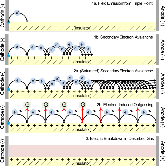
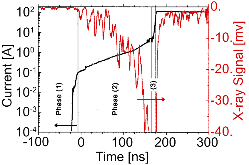
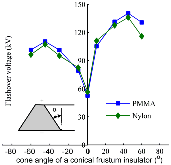
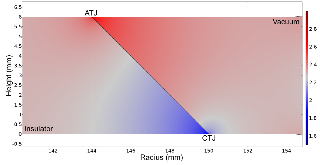
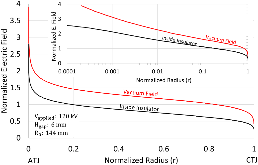
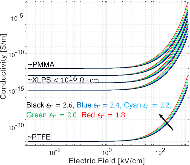
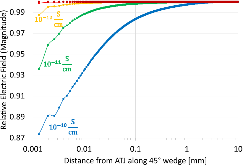
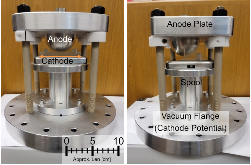
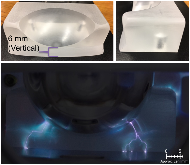
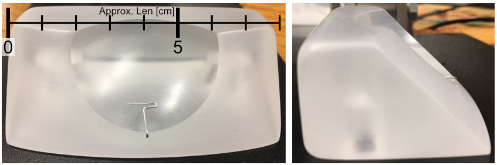
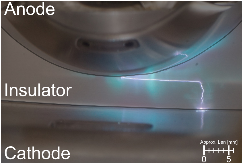
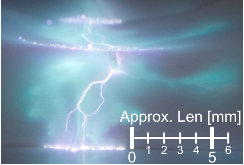
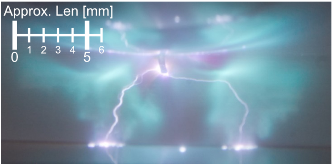
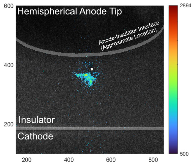
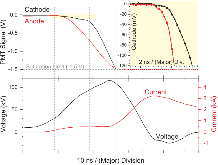
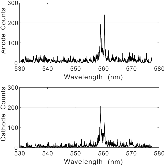
Surface flashover in vacuum imposes a substantial physical limit on modern, large-scale pulsed power. One of the ramifications is a minimum size requirement for new machines, which in itself becomes a hard barrier to the modernization and improvement of existing infrastructure. Pulsed power topologies require the physical mechanisms of both anode- and cathode-initiated flashover to be considered. Originally, the geometrical implications of field emission at the cathode triple junction (CTJ) motivated the usage of configurations that avoid electrons impinging on the insulating material. This will largely suppress the cathode-initiated flashover, which is best described by the secondary electron avalanche mechanism, gas desorption, and final breakdown in the desorbed gas. It depends on the cascade growth of a conducting plasma along the length of the insulator from the cathode. Mitigating the cathode-initiated flashover typically comes at the cost of a significant field enhancement at the anode triple junction (ATJ). In a typical implementation, the anode field may be three times higher than the cathode field for a given voltage, making the corresponding anode-initiated flashover much more common than otherwise. In the case of pulsed, anode-initiated flashover, experimental evidence suggests that charge is directly extracted from the insulator resulting in the insulator taking on a net positive charge advancing the anode potential. Furthermore, along with accompanying gas desorption from the surface, the potential will then propagate from the anode toward the cathode until the effective length of the gap is sufficiently reduced to support flashover. The underlying physical mechanisms of cathode- and anode-directed flashover are discussed in light of previously gathered experimental data and recent experiments with pulsed, high-gradient, anode-initiated flashover.
- Research Organization:
- Sandia National Laboratories (SNL-NM), Albuquerque, NM (United States)
- Sponsoring Organization:
- USDOE National Nuclear Security Administration (NNSA)
- Grant/Contract Number:
- NA0003525
- OSTI ID:
- 1888557
- Report Number(s):
- SAND2022-5333J; 705517
- Journal Information:
- IEEE Transactions on Plasma Science, Journal Name: IEEE Transactions on Plasma Science Journal Issue: 10 Vol. 50; ISSN 0093-3813
- Publisher:
- IEEECopyright Statement
- Country of Publication:
- United States
- Language:
- English
Similar Records
Statistical characterization of high voltage vacuum surface flashover with gapped and ungapped anodes
Insulator Surface Flashover Due to UV Illumination
Journal Article
·
Thu Aug 01 20:00:00 EDT 2024
· Physics of Plasmas
·
OSTI ID:2567870
Insulator Surface Flashover Due to UV Illumination
Conference
·
Mon Jul 27 00:00:00 EDT 2009
·
OSTI ID:962812