U.S. Department of Energy
Office of Scientific and Technical Information

Fracture Sustainability in Enhanced Geothermal Systems: Experimental and Modeling Constraints

Journal Article · · Journal of Energy Resources Technology
DOI:https://doi.org/10.1115/1.4049181· OSTI ID:1826723
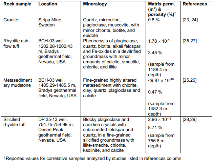
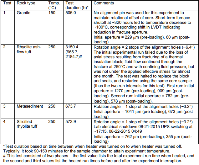
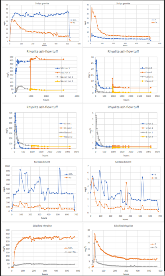
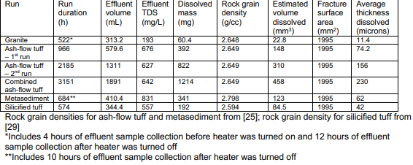
Enhanced geothermal systems (EGS) offer the potential for a much larger energy source than conventional hydrothermal systems. Hot, low-permeability rocks are prevalent at depth around the world, but the challenge of extracting thermal energy depends on the ability to create and sustain open fracture networks. Laboratory experiments were conducted using a suite of selected rock cores (granite, metasediment, rhyolite ash-flow tuff, and silicified rhyolitic tuff) at relevant pressures (uniaxial loading up to 20.7 MPa and fluid pressures up to 10.3 MPa) and temperatures (150–250 °C) to evaluate the potential impacts of circulating fluids through fractured rock by monitoring changes in fracture aperture, mineralogy, permeability, and fluid chemistry. Because a fluid in disequilibrium with the rocks (deionized water) was used for these experiments, there was net dissolution of the rock sample: this increased with increasing temperature and experiment duration. Thermal-hydrological-mechanical-chemical (THMC) modeling simulations were performed for the rhyolite ash-flow tuff experiment to test the ability to predict the observed changes. These simulations were performed in two steps: a thermal-hydrological-mechanical (THM) simulation to evaluate the effects of compression of the fracture, and a thermal-hydrological-chemical (THC) simulation to evaluate the effects of hydrothermal reactions on the fracture mineralogy, porosity, and permeability. Furthermore, these experiments and simulations point out how differences in rock mineralogy, fluid chemistry, and geomechanical properties influence how long asperity-propped fracture apertures may be sustained. Such core-scale experiments and simulations can be used to predict EGS reservoir behavior on the field scale.
Research Organization:
Lawrence Berkeley National Laboratory (LBNL), Berkeley, CA (United States)
Sponsoring Organization:
USDOE Office of Science (SC), Biological and Environmental Research (BER)
Grant/Contract Number:
AC02-05CH11231
OSTI ID:
1826723
Journal Information:
Journal of Energy Resources Technology, Journal Name: Journal of Energy Resources Technology Journal Issue: 10 Vol. 143; ISSN 0195-0738
Publisher:
ASMECopyright Statement
Country of Publication:
United States
Language:
English

References (25)

Beyond-laboratory-scale prediction for channeling flows through subsurface rock fractures with heterogeneous aperture distributions revealed by laboratory evaluation: Scale dependencies for fracture flows journal January 2015
Coupled Processes in a Fractured Reactive System book November 2018
Deterioration of a fractured carbonate caprock exposed to CO 2 -acidified brine flow : Deterioration of a fractured carbonate caprock exposed to CO journal August 2011
Formulation and sequential numerical algorithms of coupled fluid/heat flow and geomechanics for multiple porosity materials: FORMULATION AND SEQUENTIAL NUMERICAL ALGORITHMS OF COUPLED FLUID/HEAT
  • Kim, Jihoon; Sonnenthal, Eric L.; Rutqvist, Jonny
  • International Journal for Numerical Methods in Engineering, Vol. 92, Issue 5 https://doi.org/10.1002/nme.4340
journal June 2012
The Northwest Geysers EGS Demonstration Project, California: Pre-stimulation Modeling and Interpretation of the Stimulation journal October 2013
On the numerical integration of three-invariant elastoplastic constitutive models journal February 2003
HDR/HWR reservoirs: concepts, understanding and creation journal August 1999
TOUGHREACT Version 2.0: A simulator for subsurface reactive transport under non-isothermal multiphase flow conditions journal June 2011
A sequential implicit algorithm of chemo-thermo-poro-mechanics for fractured geothermal reservoirs journal March 2015
Influence of water–rock interactions on fracture permeability of the deep reservoir at Soultz-sous-Forêts, France journal October 2006
Flow channeling in a single fracture induced by shear displacement journal October 2006
Conceptual model and numerical analysis of the Desert Peak EGS project: Reservoir response to the shallow medium flow-rate hydraulic stimulation phase journal September 2016
Desert Peak EGS: Mechanisms influencing permeability evolution investigated using dual-porosity simulator TFReact journal September 2016
Field observations at the Fenton Hill enhanced geothermal system test site support mixed-mechanism stimulation journal July 2018
Joint opening or hydroshearing? Analyzing a fracture zone stimulation at Fenton Hill journal January 2019
Utah FORGE: Hydrogeothermal modeling of a granitic based discrete fracture network journal September 2020
Dissolution and deformation in fractured carbonates caused by flow of CO2-rich brine under reservoir conditions journal June 2013
Numerical modeling of injection, stress and permeability enhancement during shear stimulation at the Desert Peak Enhanced Geothermal System journal September 2015
Modeling of coupled thermal-hydraulic-mechanical-chemical processes for predicting the evolution in permeability and reactive transport behavior within single rock fractures journal July 2018
3D analysis of geometry and flow changes in a limestone fracture during dissolution journal April 2013
A 2.5D Reactive Transport Model for Fracture Alteration Simulation journal July 2016
Permeability reduction of a natural fracture under net dissolution by hydrothermal fluids: PERMEABILITY REDUCTION OF A NATURAL FRACTURE journal October 2003
Evolution of permeability in a natural fracture: Significant role of pressure solution journal January 2004
Elastic moduli, thermal expansion, and inferred permeability of two granites to 350°C and 55 megapascals journal January 1982
Coupled thermal-hydraulic-chemical modelling of enhanced geothermal systems journal May 2005

Figures / Tables (19)