Overview of the SAS4A Metallic Fuel Models and Extended Analysis of a Postulated Severe Accident in the Prototype Gen-IV Sodium-Cooled Fast Reactor
- Argonne National Lab. (ANL), Lemont, IL (United States)
- Korea Atomic Energy Research Inst. (KAERI), Daejon (Korea)
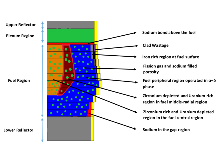
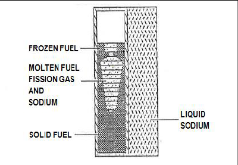
The SAS4A safety analysis code, originally developed for the analysis of postulated severe accidents in oxide fuel sodium-cooled fast reactors (SFRs), has been significantly extended to allow the mechanistic analysis of severe accidents in metallic fuel SFRs. The SAS4A metallic fuel models simulate the metallic fuel thermomechanical and chemical behavior and track the evolution and relocation of multiple fuel and cladding components during the pretransient irradiation and during the postulated accident, allowing an accurate description of the changes in the local fuel composition. The local fuel composition determines the fuel thermophysical properties, such as freezing and melting temperatures, which in turn affect the fuel relocation behavior and ultimately the core reactivity and power history during the postulated accidents. Models describing the fuel-cladding interaction and eutectic formation, the effects of the in-pin sodium on the in-pin fuel relocation, and the postfailure reentry of the molten fuel and fission gas from the pin plenum have also been added. This paper provides an overview of the SAS4A key metallic fuel models emphasizing the postfailure metallic fuel relocation models included in the LEVITATE-M module of SAS4A. The capabilities of the SAS4A metallic fuel models are illustrated through an extended SAS4A analysis of a postulated unprotected loss-of-flow and transient-overpower accident in the metallic fuel prototype Gen-IV sodium fast reactor. The results show that the maximum relative power reached during the postulated accident is 1.19 P0. The favorable characteristics of the metallic fuel cause a significant decrease in net reactivity and relative power due to prefailure in-pin fuel relocation. Furthermore, negative net reactivity values persist after cladding failure, and the postfailure fuel relocation events occur at low and decreasing power levels.
- Research Organization:
- Argonne National Laboratory (ANL), Argonne, IL (United States)
- Sponsoring Organization:
- Korea Atomic Energy Research Institute (KAERI)
- Grant/Contract Number:
- AC02-06CH11357
- OSTI ID:
- 1607402
- Journal Information:
- Nuclear Technology, Journal Name: Nuclear Technology Journal Issue: 2 Vol. 206; ISSN 0029-5450
- Publisher:
- Taylor & Francis - formerly American Nuclear Society (ANS)Copyright Statement
- Country of Publication:
- United States
- Language:
- English
Overall System Description and Safety Characteristics of Prototype Gen IV Sodium Cooled Fast Reactor in Korea
|
journal | October 2016 |


Similar Records
SAS4A analysis of the M7 metal fuel experiment
Studies of prefailure fuel extrusion in metal fuel pins with EXTRUS