A Measurement of the Cosmic Microwave Background Lensing Potential and Power Spectrum from 500 deg2 of SPTpol Temperature and Polarization Data
Journal Article
·
· The Astrophysical Journal (Online)
more »
- Univ. of Chicago, IL (United States). Kavli Inst. for Cosmological Physics
- Univ. of Chicago, IL (United States). Kavli Inst. for Cosmological Physics, and Dept. of Astronomy and Astrophysics; Univ. of Oslo (Norway). Inst. of Theoretical Astrophysics
- Cardiff Univ. (United Kingdom)
- Fermi National Accelerator Lab. (FNAL), Batavia, IL (United States)
- NIST Quantum Devices Group, Boulder, CO (United States)
- Univ. of California, Berkeley, CA (United States). Dept. of Physics
- Univ. of Chicago, IL (United States). Kavli Inst. for Cosmological Physics; Argonne National Lab. (ANL), Argonne, IL (United States). High Energy Physics Division
- Univ. of Chicago, IL (United States). Kavli Inst. for Cosmological Physics, and Dept. of Astronomy and Astrophysics; Fermi National Accelerator Lab. (FNAL), Batavia, IL (United States)
- Univ. of Melbourne, Parkville (Australia). School of Physics
- Univ. of Chicago, IL (United States). Kavli Inst. for Cosmological Physics, Dept. of Astronomy and Astrophysics, Dept. of Physics, and Enrico Fermi Inst.; Argonne National Lab. (ANL), Argonne, IL (United States). High Energy Physics Division
- Univ. of Chicago, IL (United States). Kavli Inst. for Cosmological Physics, and Dept. of Astronomy and Astrophysics; Argonne National Lab. (ANL), Argonne, IL (United States). High Energy Physics Division
- McGill Univ., Montreal, QC (Canada). Dept. of Physics; Univ. of KwaZulu-Natal, Durban (South Africa). School of Mathematics, Statistics & Computer Science
- California Inst. of Technology (CalTech), Pasadena, CA (United States). Theoretical AstroPhysics Including Relativity and Cosmology (TAPIR), Walter Burke Inst. for Theoretical Physics
- Univ. of Chicago, IL (United States). Kavli Inst. for Cosmological Physics, and Dept. of Astronomy and Astrophysics
- Univ. of Chicago, IL (United States). Kavli Inst. for Cosmological Physics, and Dept. of Astronomy and Astrophysics; California Inst. of Technology (CalTech), Pasadena, CA (United States)
- Univ. of California, Berkeley, CA (United States). Dept. of Physics; Lawrence Berkeley National Lab. (LBNL), Berkeley, CA (United States). Physics Division
- McGill Univ., Montreal, QC (Canada). Dept. of Physics; Canadian Inst. for Advanced Research (CIFAR), Toronto, ON (Canada). Program in Cosmology and Gravity
- Univ. of Colorado, Boulder, CO (United States). Dept. of Astrophysical and Planetary Sciences
- Univ. of Chicago, IL (United States). Kavli Inst. for Cosmological Physics; Harvey Mudd College, Claremont, CA (United States)
- Univ. of California, Berkeley, CA (United States). Dept. of Physics; European Southern Observatory, Garching bei München (Germany)
- McGill Univ., Montreal, QC (Canada). Dept. of Physics
- Univ. of Colorado, Boulder, CO (United States). Dept. of Astrophysical and Planetary Sciences, and Dept. of Physics
- Canadian Inst. for Advanced Research (CIFAR), Toronto, ON (Canada). Program in Cosmology and Gravity; Univ. of Illinois at Urbana-Champaign, IL (United States). Astronomy Dept.
- Univ. of Chicago, IL (United States)
- SLAC National Accelerator Lab., Menlo Park, CA (United States); Stanford Univ., CA (United States). Dept. of Physics
- Univ. of California, Davis, CA (United States). Dept. of Physics
- NIST Quantum Devices Group, Boulder, CO (United States); SLAC National Accelerator Lab., Menlo Park, CA (United States)
- Univ. of Chicago, IL (United States). Kavli Inst. for Cosmological Physics; Inst. d'Astrophysique, Paris (France)
- Univ. of Michigan, Ann Arbor, MI (United States). Dept. of Physics
- Univ. of Chicago, IL (United States). Kavli Inst. for Cosmological Physics, Dept. of Astronomy and Astrophysics, Dept. of Physics, and Enrico Fermi Inst.
- Univ. of Illinois at Urbana-Champaign, IL (United States). Astronomy Dept.
- Argonne National Lab. (ANL), Argonne, IL (United States). Materials Science Division
- Stanford Univ., CA (United States). Dept. of Physics, and Kavli Inst. for Particle Astrophysics and Cosmology
- Univ. of Minnesota, Minneapolis, MN (United States). School of Physics and Astronomy
- Case Western Reserve Univ., Cleveland, OH (United States). Physics Dept., Center for Education and Research in Cosmology and Astrophysics
- Univ. of KwaZulu-Natal, Durban (South Africa). School of Mathematics, Statistics & Computer Science; Yale Univ., New Haven, CT (United States). Dept. of Physics
- Univ. of Chicago, IL (United States). Kavli Inst. for Cosmological Physics, and Enrico Fermi Inst.; School of the Art Inst., Chicago, IL (United States). Liberal Arts Dept.
- McGill Univ., Montreal, QC (Canada). Dept. of Physics; Three-Speed Logic, Inc., Vancouver, BC (Canada)
- Harvard-Smithsonian Center for Astrophysics, Cambridge, MA (United States)
- Univ. of Toronto, ON (Canada). Dunlap Inst. for Astronomy & Astrophysics, and Dept. of Astronomy & Astrophysics
- Univ. of Maryland, College Park, MD (United States). Dept. of Astronomy
- Argonne National Lab. (ANL), Argonne, IL (United States). High Energy Physics Division
- Univ. of California, Los Angeles, CA (United States). Dept. of Physics and Astronomy
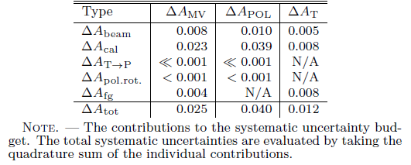
In this work, we present a measurement of the cosmic microwave background (CMB) lensing potential using 500 deg$^2$ of 150 GHz data from the SPTpol receiver on the South Pole Telescope. The lensing potential is reconstructed with signal-to-noise per mode greater than unity at lensing multipoles $$L \lesssim 250$$, using a quadratic estimator on a combination of CMB temperature and polarization maps. We report measurements of the lensing potential power spectrum in the multipole range of $100< L < 2000$ from sets of temperature-only, polarization-only, and minimum-variance estimators. We measure the lensing amplitude by taking the ratio of the measured spectrum to the expected spectrum from the best-fit $$\Lambda$$CDM model to the $$\textit{Planck}$$ 2015 TT+lowP+lensing dataset. For the minimum-variance estimator, we find $$A_{\rm{MV}} = 0.944 \pm 0.058{\rm (Stat.)}\pm0.025{\rm (Sys.)}$$; restricting to only polarization data, we find $$A_{\rm{POL}} = 0.906 \pm 0.090 {\rm (Stat.)} \pm 0.040 {\rm (Sys.)}$$. Considering statistical uncertainties alone, this is the most precise polarization-only lensing amplitude constraint to date (10.1 $$\sigma$$), and is more precise than our temperature-only constraint. We perform null tests and consistency checks and find no evidence for significant contamination.
- Research Organization:
- Argonne National Laboratory (ANL), Argonne, IL (United States); Argonne National Laboratory (ANL), Argonne, IL (United States). Center for Nanoscale Materials (CNM); Fermi National Accelerator Laboratory (FNAL), Batavia, IL (United States); Lawrence Berkeley National Laboratory (LBNL), Berkeley, CA (United States); Lawrence Berkeley National Laboratory (LBNL), Berkeley, CA (United States). National Energy Research Scientific Computing Center (NERSC); SLAC National Accelerator Laboratory (SLAC), Menlo Park, CA (United States); University of Illinois, Urbana, IL (United States)
- Sponsoring Organization:
- Australian Research Council (ARC); Canadian Institute for Advanced Research (CIFAR); Gordon and Betty Moore Foundation; Kavli Foundation; National Science Foundation (NSF); Natural Sciences and Engineering Research Council of Canada (NSERC); Science and Technologies Facilities Council (STFC-UK); USDOE Office of Science (SC); USDOE Office of Science (SC), High Energy Physics (HEP) (SC-25)
- Contributing Organization:
- Australian Research Council; Gordon and Betty Moore Foundation
- Grant/Contract Number:
- AC02-05CH11231; AC02-06CH11357; AC02-07CH11359; AC02-76SF00515; SC0015640
- OSTI ID:
- 1513283
- Alternate ID(s):
- OSTI ID: 1603354
OSTI ID: 1737580
OSTI ID: 1634022
OSTI ID: 1595189
- Report Number(s):
- FERMILAB-PUB--19-225-AE; arXiv:1905.05777; oai:inspirehep.net:1735176
- Journal Information:
- The Astrophysical Journal (Online), Journal Name: The Astrophysical Journal (Online) Journal Issue: 1 Vol. 884; ISSN 1538-4357
- Publisher:
- Institute of Physics (IOP)Copyright Statement
- Country of Publication:
- United States
- Language:
- English
Constraints on Cosmological Parameters from the 500 deg 2 SPTPOL Lensing Power Spectrum
|
journal | January 2020 |
| Constraints on Cosmological Parameters from the 500 deg$^2$ SPTpol Lensing Power Spectrum | text | January 2019 |


Similar Records
Related Subjects
79 ASTRONOMY AND ASTROPHYSICS
Planck
analysis
background
calculations
cosmic
cosmological
cosmology: cosmic background radiation
data
gravitation:
gravitational lensing
large-scale structure
large-scale structure of the universe
lens
method
model
multipole
numerical
polarization
power
radiation:
satellite:
smic
spectrum
statistical
temperature
|
Planck
analysis
background
calculations
cosmic
cosmological
cosmology: cosmic background radiation
data
gravitation:
gravitational lensing
large-scale structure
large-scale structure of the universe
lens
method
model
multipole
numerical
polarization
power
radiation:
satellite:
smic
spectrum
statistical
temperature
|