|
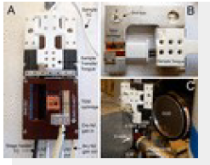
A portable cryo-plunger for on-site intact cryogenic microscopy sample preparation in natural environments
|
journal
|
December 2011 |
|
The Genus Zoogloea
|
book
|
January 2006 |
|
Transformation of selenate and selenite to elemental selenium byDesulfovibrio desulfuricans
|
journal
|
March 1995 |
|
Ferribacterium limneticum , gen. nov., sp. nov., an Fe(III)-reducing microorganism isolated from mining-impacted freshwater lake sediments
|
journal
|
February 1999 |
|
Community structure and function in a H2-based membrane biofilm reactor capable of bioreduction of selenate and chromate
|
journal
|
May 2006 |
|
Reduction of Selenite to Elemental Red Selenium by Pseudomonas sp. Strain CA5
|
journal
|
February 2009 |
|
Determination of chemical-structural changes in vitrinite accompanying luminescence alteration using C-NEXAFS analysis
|
journal
|
May 1998 |
|
The biofilm matrix – an immobilized but dynamic microbial environment
|
journal
|
May 2001 |
|
Geochemical, mineralogical and microbiological characteristics of sediment from a naturally reduced zone in a uranium-contaminated aquifer
|
journal
|
August 2012 |
|
Characterization of a novel selenium methyltransferase from freshwater bacteria showing strong similarities with the calicheamicin methyltransferase
|
journal
|
July 2004 |
|
Soft X-ray induced chemical modification of polysaccharides in vascular plant cell walls
|
journal
|
March 2009 |
|
Some practical considerations about the effects of radiation damage on hydrated cells imaged by X-ray fluorescence microscopy
|
journal
|
March 2009 |
|
Introduction: Special issue on radiation damage
|
journal
|
March 2009 |
|
Dose tolerance at helium and nitrogen temperatures for whole cell electron tomography
|
journal
|
December 2005 |
|
Biosynthesis and structural characterization of selenium nanoparticles mediated by Zooglea ramigera
|
journal
|
August 2013 |
|
Supplementing Bacillus sp. RS1 with Dechloromonas sp. HZ for enhancing selenate reduction in agricultural drainage water
|
journal
|
January 2007 |
|
Quantitative Speciation of Selenium in Soils Using X-ray Absorption Spectroscopy
|
journal
|
September 1995 |
|
Microscopically Focused Synchrotron X-ray Investigation of Selenium Speciation in Soils Developing on Reclaimed Mine Lands
|
journal
|
January 2006 |
|
Combined Speciation Analysis by X-ray Absorption Near-Edge Structure Spectroscopy, Ion Chromatography, and Solid-Phase Microextraction Gas Chromatography−Mass Spectrometry To Evaluate Biotreatment of Concentrated Selenium Wastewaters
|
journal
|
February 2011 |
|
Colloidal Properties of Nanoparticular Biogenic Selenium Govern Environmental Fate and Bioremediation Effectiveness
|
journal
|
February 2013 |
|
Vanadate and Acetate Biostimulation of Contaminated Sediments Decreases Diversity, Selects for Specific Taxa, and Decreases Aqueous V 5+ Concentration
|
journal
|
May 2013 |
|
Nitrate Shaped the Selenate-Reducing Microbial Community in a Hydrogen-Based Biofilm Reactor
|
journal
|
March 2014 |
|
Uranium Bioreduction Rates across Scales: Biogeochemical Hot Moments and Hot Spots during a Biostimulation Experiment at Rifle, Colorado
|
journal
|
August 2014 |
|
Influence of Heterogeneous Ammonium Availability on Bacterial Community Structure and the Expression of Nitrogen Fixation and Ammonium Transporter Genes during in Situ Bioremediation of Uranium-Contaminated Groundwater
|
journal
|
June 2009 |
|
Microbial Oxidation of Elemental Selenium in Soil Slurries and Bacterial Cultures
|
journal
|
December 1998 |
|
La 2 U 2 Se 9 : An Ordered Lanthanide/Actinide Chalcogenide with a Novel Structure Type
|
journal
|
March 2010 |
|
Biomineralization of Fine Selenium Crystalline Rods and Amorphous Spheres
|
journal
|
July 2009 |
|
A Selenium Cycle in Nature?
|
journal
|
March 1964 |
|
Anaerobic benzene oxidation coupled to nitrate reduction in pure culture by two strains of Dechloromonas
|
journal
|
June 2001 |
|
Molecular analysis of phosphate limitation in Geobacteraceae during the bioremediation of a uranium-contaminated aquifer
|
journal
|
December 2009 |
|
Iron-reducing bacteria accumulate ferric oxyhydroxide nanoparticle aggregates that may support planktonic growth
|
journal
|
October 2012 |
|
Biostimulation induces syntrophic interactions that impact C, S and N cycling in a sediment microbial community
|
journal
|
November 2012 |
|
Metabolic interdependencies between phylogenetically novel fermenters and respiratory organisms in an unconfined aquifer
|
journal
|
March 2014 |
|
The biological role of death and lysis in biofilm development
|
journal
|
September 2007 |
|
Multimetal resistance and tolerance in microbial biofilms
|
journal
|
December 2007 |
|
Cryo-electron tomography of bacteria: progress, challenges and future prospects
|
journal
|
August 2009 |
|
The biofilm matrix
|
journal
|
August 2010 |
|
Biotransformation of selenium and arsenic in multi-species biofilm
|
journal
|
January 2011 |
|
A bacterial process for selenium nanosphere assembly
|
journal
|
August 2011 |
|
Local Sequence Dependence of Polyhydroxyalkanoic Acid Degradation in Hydrogenophaga pseudoflava
|
journal
|
December 1999 |
|
Acetate Availability and its Influence on Sustainable Bioremediation of Uranium-Contaminated Groundwater
|
journal
|
June 2011 |
|
Investigating different mechanisms for biogenic selenite transformations: Geobacter sulfurreducens , Shewanella oneidensis and Veillonella atypica
|
journal
|
November 2009 |
|
Reduction of Elemental Selenium to Selenide: Experiments with Anoxic Sediments and Bacteria that Respire Se-Oxyanions
|
journal
|
November 2003 |
|
Role of proteins in controlling selenium nanoparticle size
|
journal
|
March 2011 |
|
Hydrogenophaga, a New Genus of Hydrogen-Oxidizing Bacteria That Includes Hydrogenophaga flava comb. nov. (Formerly Pseudomonas flava), Hydrogenophaga palleronii (Formerly Pseudomonas palleronii), Hydrogenophaga pseudoflava (Formerly Pseudomonas pseudoflava and "Pseudomonas carboxydoflava"), and Hydrogenophaga taeniospiralis (Formerly Pseudomonas taeniospiralis)
|
journal
|
July 1989 |
|
Malikia granosa gen. nov., sp. nov., a novel polyhydroxyalkanoate- and polyphosphate-accumulating bacterium isolated from activated sludge, and reclassification of Pseudomonas spinosa as Malikia spinosa comb. nov.
|
journal
|
March 2005 |
|
Proposal of Giesbergeria voronezhensis gen. nov., sp. nov. and G. kuznetsovii sp. nov. and reclassification of [Aquaspirillum] anulus, [A.] sinuosum and [A.] giesbergeri as Giesbergeria anulus comb. nov., G. sinuosa comb. nov. and G. giesbergeri comb. nov., and [Aquaspirillum] metamorphum and [A.] psychrophilum as Simplicispira metamorpha gen. nov., comb. nov. and S. psychrophila comb. nov.
|
journal
|
March 2006 |
|
Effect of pressure on the atom positions in Se and Te
|
journal
|
November 1977 |
|
Structural study of amorphous selenium by in situ EXAFS: Observation of photoinduced bond alternation
|
journal
|
January 1997 |
|
XAFS study of interchain and intrachain order in Se 1 − x Te x glasses: Nearest neighbors
|
journal
|
September 1998 |
|
Selenium Accumulation, Distribution, and Speciation in Spineless Prickly Pear Cactus: A Drought- and Salt-Tolerant, Selenium-Enriched Nutraceutical Fruit Crop for Biofortified Foods
|
journal
|
November 2010 |
|
IFEFFIT : interactive XAFS analysis and FEFF fitting
|
journal
|
March 2001 |
|
Beamline 10.3.2 at ALS: a hard X-ray microprobe for environmental and materials sciences
|
journal
|
April 2004 |
|
ATHENA , ARTEMIS , HEPHAESTUS : data analysis for X-ray absorption spectroscopy using IFEFFIT
|
journal
|
June 2005 |
|
XANES measurements of the rate of radiation damage to selenomethionine side chains
|
journal
|
December 2006 |
|
Synchrotron-radiation-induced oxidation of selenite to selenate in coal-derived fly ash
|
journal
|
March 2011 |
|
X-ray-induced photo-chemistry and X-ray absorption spectroscopy of biological samples
|
journal
|
October 2012 |
|
Field evidence of selenium bioreduction in a uranium-contaminated aquifer: Field evidence of selenium bioreduction
|
journal
|
February 2013 |
|
High-density PhyloChip profiling of stimulated aquifer microbial communities reveals a complex response to acetate amendment
|
journal
|
April 2012 |
|
Intracellular degradation of poly(3-hydroxybutyrate) granules of Zoogloea ramigera I-16-M
|
journal
|
December 1992 |
|
Extracellular Proteins Limit the Dispersal of Biogenic Nanoparticles
|
journal
|
June 2007 |
|
Fermentation, Hydrogen, and Sulfur Metabolism in Multiple Uncultivated Bacterial Phyla
|
journal
|
September 2012 |
|
Shedding Light on Selenium Biomineralization: Proteins Associated with Bionanominerals
|
journal
|
May 2011 |
|
Imaging Hydrated Microbial Extracellular Polymers: Comparative Analysis by Electron Microscopy
|
journal
|
December 2010 |
|
Reduction of Selenate to Selenide by Sulfate-Respiring Bacteria: Experiments with Cell Suspensions and Estuarine Sediments
|
journal
|
June 1987 |
|
Selenate Reduction to Elemental Selenium by Anaerobic Bacteria in Sediments and Culture: Biogeochemical Significance of a Novel, Sulfate-Independent Respiration
|
journal
|
September 1989 |
|
Dissimilatory Selenate Reduction Potentials in a Diversity of Sediment Types
|
journal
|
November 1990 |
|
Nitrate Is a Preferred Electron Acceptor for Growth of Freshwater Selenate-Respiring Bacteria
|
journal
|
January 1992 |
|
Isolation of Geobacter species from diverse sedimentary environments.
|
journal
|
January 1996 |
|
Reduction of Selenium Oxyanions by Enterobacter cloacae SLD1a-1: Isolation and Growth of the Bacterium and Its Expulsion of Selenium Particles
|
journal
|
August 1997 |
|
Simultaneous Reduction of Nitrate and Selenate by Cell Suspensions of Selenium-Respiring Bacteria
|
journal
|
October 1999 |
|
Reduction of Selenite and Detoxification of Elemental Selenium by the Phototrophic Bacterium Rhodospirillum rubrum
|
journal
|
November 1999 |
|
Stimulating the In Situ Activity of Geobacter Species To Remove Uranium from the Groundwater of a Uranium-Contaminated Aquifer
|
journal
|
October 2003 |
|
Structural and Spectral Features of Selenium Nanospheres Produced by Se-Respiring Bacteria
|
journal
|
January 2004 |
|
Chemical Forms of Selenium in the Metal-Resistant Bacterium Ralstonia metallidurans CH34 Exposed to Selenite and Selenate
|
journal
|
May 2005 |
|
Reduction of Selenate to Selenide by Sulfate-Respiring Bacteria: Experiments with Cell Suspensions and Estuarine Sediments
|
journal
|
June 1987 |
|
Selenate Reduction to Elemental Selenium by Anaerobic Bacteria in Sediments and Culture: Biogeochemical Significance of a Novel, Sulfate-Independent Respiration
|
journal
|
September 1989 |
|
Dissimilatory Selenate Reduction Potentials in a Diversity of Sediment Types
|
journal
|
November 1990 |
|
Nitrate Is a Preferred Electron Acceptor for Growth of Freshwater Selenate-Respiring Bacteria
|
journal
|
January 1992 |
|
Isolation of Geobacter species from diverse sedimentary environments.
|
journal
|
January 1996 |
|
Reduction of Selenium Oxyanions by Enterobacter cloacae SLD1a-1: Isolation and Growth of the Bacterium and Its Expulsion of Selenium Particles
|
journal
|
August 1997 |
|
Organic chemical differentiation within fossil plant cell walls detected with X-ray spectromicroscopy
|
journal
|
January 2002 |
|
Reduction of selenate and selenite to elemental selenium by Wolinella succinogenes
|
journal
|
December 1992 |
|
Dissimilatory Metal Reduction
|
journal
|
October 1993 |
|
Micro-spectroscopic investigation of selenium-bearing minerals from the Western US Phosphate Resource Area
|
journal
|
January 2005 |
|
Metabolic analysis of the soil microbe Dechloromonas aromatica str. RCB: indications of a surprisingly complex life-style and cryptic anaerobic pathways for aromatic degradation
|
journal
|
January 2009 |
|
Selenite reduction by the obligate aerobic bacterium Comamonas testosteroni S44 isolated from a metal-contaminated soil
|
journal
|
August 2014 |
|
Inter-species interconnections in acid mine drainage microbial communities
|
journal
|
July 2014 |