Time-Dependent Cryospheric Longwave Surface Emissivity Feedback in the Community Earth System Model
Journal Article
·
· Journal of Geophysical Research: Atmospheres
- Lawrence Berkeley National Lab. (LBNL), Berkeley, CA (United States). Climate and Ecosystem Sciences Division
- Univ. of Michigan, Ann Arbor, MI (United States). Dept. of Climate and Space Sciences and Engineering
- Texas A & M Univ., College Station, TX (United States). Dept. of Atmospheric Sciences
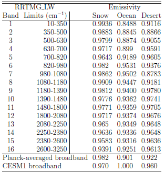
Frozen and unfrozen surfaces exhibit different longwave surface emissivities with different spectral characteristics, and outgoing longwave radiation and cooling rates are reduced for unfrozen scenes relative to frozen ones. In this paper physically realistic modeling of spectrally resolved surface emissivity throughout the coupled model components of the Community Earth System Model (CESM) is advanced, and implications for model high-latitude biases and feedbacks are evaluated. It is shown that despite a surface emissivity feedback amplitude that is, at most, a few percent of the surface albedo feedback amplitude, the inclusion of realistic, harmonized longwave, spectrally resolved emissivity information in CESM1.2.2 reduces wintertime Arctic surface temperature biases from -7.2 ± 0.9 K to -1.1 ± 1.2 K, relative to observations. The bias reduction is most pronounced in the Arctic Ocean, a region for which Coupled Model Intercomparison Project version 5 (CMIP5) models exhibit the largest mean wintertime cold bias, suggesting that persistent polar temperature biases can be lessened by including this physically based process across model components. The ice emissivity feedback of CESM1.2.2 is evaluated under a warming scenario with a kernel-based approach, and it is found that emissivity radiative kernels exhibit water vapor and cloud cover dependence, thereby varying spatially and decreasing in magnitude over the course of the scenario from secular changes in atmospheric thermodynamics and cloud patterns. Finally, accounting for the temporally varying radiative responses can yield diagnosed feedbacks that differ in sign from those obtained from conventional climatological feedback analysis methods.
- Research Organization:
- Lawrence Berkeley National Laboratory (LBNL), Berkeley, CA (United States)
- Sponsoring Organization:
- USDOE; USDOE Office of Science (SC), Biological and Environmental Research (BER) (SC-23)
- Grant/Contract Number:
- AC02-05CH11231
- OSTI ID:
- 1464160
- Alternate ID(s):
- OSTI ID: 1417495
- Journal Information:
- Journal of Geophysical Research: Atmospheres, Journal Name: Journal of Geophysical Research: Atmospheres Journal Issue: 2 Vol. 123; ISSN 2169-897X
- Publisher:
- American Geophysical UnionCopyright Statement
- Country of Publication:
- United States
- Language:
- English
Sensitivity of Mountain Hydroclimate Simulations in Variable‐Resolution CESM to Microphysics and Horizontal Resolution
|
journal | June 2018 |


Similar Records
Major improvements on the longwave radiative interactions between surface and clouds in the polar regions in atmospheric global circulation model
The Effects of Surface Longwave Spectral Emissivity on Atmospheric Circulation and Convection over the Sahara and Sahel
Technical Report
·
Thu Mar 14 00:00:00 EDT 2019
·
OSTI ID:1499260
The Effects of Surface Longwave Spectral Emissivity on Atmospheric Circulation and Convection over the Sahara and Sahel
Journal Article
·
Sun Jul 14 20:00:00 EDT 2019
· Journal of Climate
·
OSTI ID:1542546