Methane Diffusion and Adsorption in Shale Rocks: A Numerical Study Using the Dusty Gas Model in TOUGH2/EOS7C-ECBM
- Chinese Academy of Sciences (CAS), Beijing (China). Key Lab. for Mechanics in Fluid Solid Coupling Systems, Inst. of Mechanics; Lawrence Berkeley National Lab. (LBNL), Berkeley, CA (United States). Energy Geosciences Division; Chinese Academy of Sciences (CAS), Langfang (China). Inst. of Porous Flow and Fluid Mechanics
- Lawrence Berkeley National Lab. (LBNL), Berkeley, CA (United States). Energy Geosciences Division
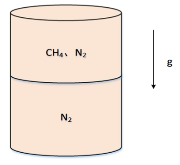
Gas production from shale gas reservoirs plays a significant role in satisfying increasing energy demands. Compared with conventional sandstone and carbonate reservoirs, shale gas reservoirs are characterized by extremely low porosity, ultra-low permeability and high clay content. Slip flow, diffusion, adsorption and desorption are the primary gas transport processes in shale matrix, while Darcy flow is restricted to fractures. Understanding methane diffusion and adsorption, and gas flow and equilibrium in the low-permeability matrix of shale is crucial for shale formation evaluation and for predicting gas production. Modeling of diffusion in low-permeability shale rocks requires use of the Dusty gas model (DGM) rather than Fick’s law. The DGM is incorporated in the TOUGH2 module EOS7C-ECBM, a modified version of EOS7C that simulates multicomponent gas mixture transport in porous media. Also included in EOS7C-ECBM is the extended Langmuir model for adsorption and desorption of gases. In this study, a column shale model was constructed to simulate methane diffusion and adsorption through shale rocks. The process of binary CH4- N2 diffusion and adsorption was analyzed. A sensitivity study was performed to investigate the effects of pressure, temperature and permeability on diffusion and adsorption in shale rocks. The results show that methane gas diffusion and adsorption in shale is a slow process of dynamic equilibrium, which can be illustrated by the slope of a curve in CH4mass variation. The amount of adsorption increases with the pressure increase at the low pressure, and the mass change by gas diffusion will decrease due to the decrease in the compressibility factor of the gas. With the elevated temperature, the gas molecules move faster and then the greater gas diffusion rates make the process duration shorter. The gas diffusion rate decreases with the permeability decrease, and there is a limit of gas diffusion if the permeability is less than 1.0×10⁻¹⁵ m2. In conclusion, the results can provide insights for a better understanding of methane diffusion and adsorption in the shale rocks so as to optimize gas production performance of shale gas reservoirs.
- Research Organization:
- Lawrence Berkeley National Laboratory (LBNL), Berkeley, CA (United States)
- Sponsoring Organization:
- USDOE Office of Science (SC)
- Grant/Contract Number:
- AC02-05CH11231
- OSTI ID:
- 1460342
- Journal Information:
- Transport in Porous Media, Journal Name: Transport in Porous Media Journal Issue: 3 Vol. 123; ISSN 0169-3913
- Publisher:
- SpringerCopyright Statement
- Country of Publication:
- United States
- Language:
- English
Experimental study on flow characteristics of gas transport in micro- and nanoscale pores
|
journal | July 2019 |
Study of the effects of hydraulic fractures on gas and water flow in shale gas reservoirs
|
journal | October 2019 |
Study on mechanical characteristics and damage mechanism of the Longmaxi Formation shale in southern Sichuan Basin, China
|
journal | September 2019 |
Flowing material balance method with adsorbed phase volumes for unconventional gas reservoirs
|
journal | September 2019 |


Similar Records
EOS7C Version 1.0: TOUGH2 Module for Carbon Dioxide or Nitrogen inNatural Gas (Methane) Reservoirs
Modification of TOUGH2 to Include the Dusty Gas Model for Gas Diffusion